 Myopia surgery
 Myopia prevention and control
 Presbyopia
 Cataract
 Dry eye
 400-8600-525
 CN
 One City, Three Campuses

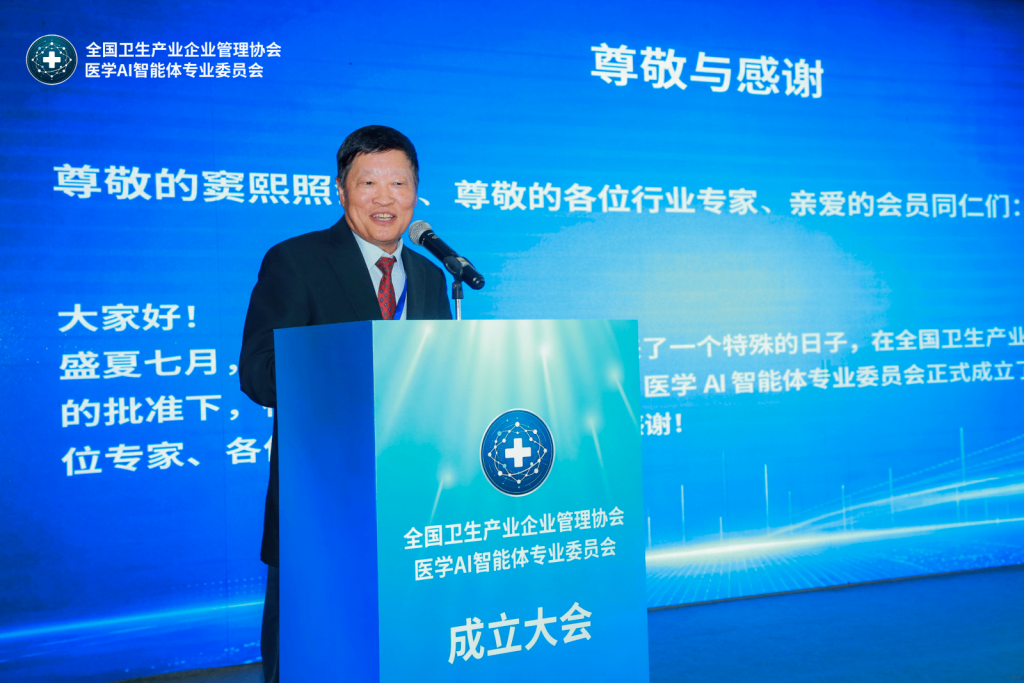
Inaugural Speech by Committee Chair Zhu Siquan
On July 12, the Medical AI Agent Specialty Committee of the National Association of Health Industry and Enterprise Management was founded in Beijing. Professor Zhu Siquan, Chief Expert of Ming Vision & Ophthalmology, was elected as the Committee Chair.
The founding conference brought together experts and scholars, representatives of medical institutions and members of the industry from across the country. Academicians of the Chinese Academy of Engineering, namely Ji Xunming, Han Demin, Xie Lixin, Fan Xianqun, Wang Zhenchang, Wang Ningli and Yang Zhenglin, as well as academicians of the two academies including Zeng Musheng, Han Jiahuai and Ji Jiafu, attended the conference and delivered speeches. Many of the academicians spoke highly of the establishment of the specialty committee.
In his inaugural speech as Committee Chair, Professor Zhu Siquan stated that the specialty committee will uphold the development philosophy of "innovation, systematization, standardization and empowerment," build a bridge connecting the government, the industry, medical institutions, research institutes and enterprises, and make sustained efforts in academic exchange, the formulation of industry standards, collaborative innovation, data support, the dissemination of technologies to the grassroots level as well as the training of interdisciplinary talents, so as to help medical AI truly take root in clinical practice and serve both doctors and patients.
The academicians present at the meeting each expressed their views on the future direction of medical AI agents. Academician Xie Lixin clearly stated that the development of medical AI must remain true to the essence of medicine, address the essential needs of the grassroots, and respect the laws of medicine; that original research should be carried out on the basis of clinical data of the Chinese population; and that the practice of following technological trends for self-promotion must be avoided. Academicians Fan Xianqun and Wang Zhenchang, drawing on their work in specialty diagnosis and treatment as well as medical imaging, proposed that the platform of the specialty committee should be used to resolve difficult problems in refined specialty diagnosis and treatment, to advance research on domestically developed medical AI technologies and the building of industry standards, and to make intelligent medical technologies accessible to the grassroots.
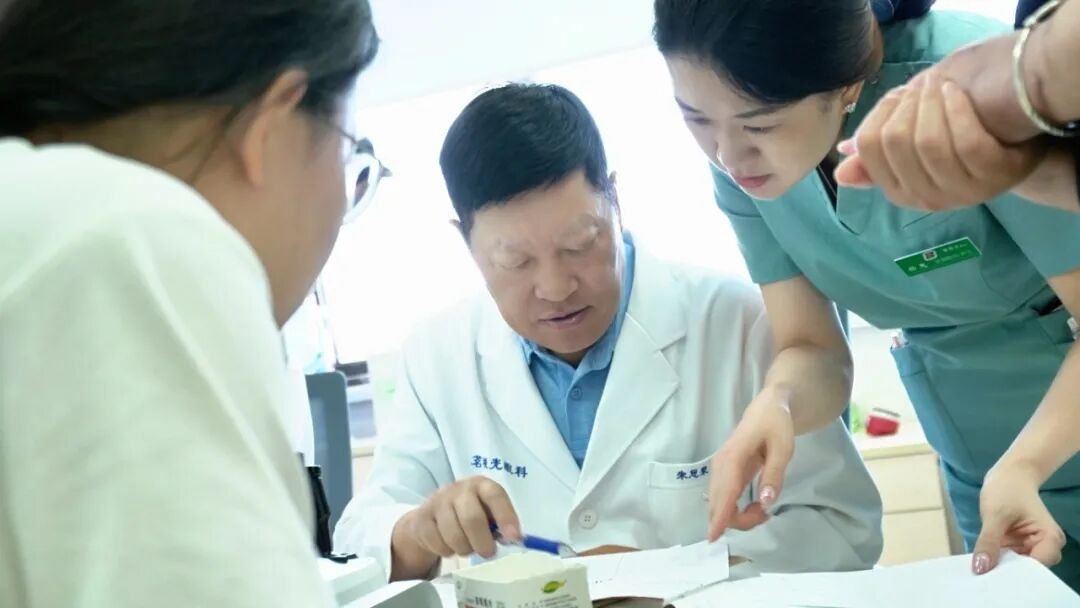
Since the establishment of its Intraocular Lens Center in 2023, Ming Vision & Ophthalmology has focused on refractive presbyopia and cataract, in particular the diagnosis and treatment of cataracts after refractive surgery. It has consistently followed the development and application of new types of intraocular lenses worldwide, from being among the first in China to perform femtosecond laser-assisted cataract surgery to taking the lead in introducing monofocal extended depth of focus, trifocal, continuous range of vision as well as toric lenses, thereby realizing the beautiful life dreams of its patients through technology.
Professor Zhu Siquan has long been deeply engaged in the clinical field of intraocular lens surgery. His appointment as Chair of a national medical AI specialty committee means that he will directly take part in promoting the formulation of AI diagnostic and treatment standards in ophthalmology as well as their clinical translation. For patients of the Intraocular Lens Center of Ming Vision & Ophthalmology, this means that key steps in diagnosis and treatment, ranging from intraocular lens power calculation and surgical planning to postoperative visual quality assessment, will benefit from rigorously validated AI-assisted technologies, so that they can receive more precise and personalized solutions under the dual protection of medical safety standards and clinical practice norms.
 Online Booking

 Tel
 WeChat

 Address

 Consult