 Myopia surgery
 Myopia prevention and control
 Presbyopia
 Cataract
 Dry eye
 400-8600-525
 CN
 One City, Three Campuses

Summer ushers in a wave of vision correction among college students, students returning from abroad, and high school students. Many people are full of questions: how safe is myopia surgery? How should one decide among SMILE, FS-LASIK, and ICL implantation? Today’s comprehensive analysis of myopia surgery procedures will answer all of these difficult choices in one go.
The underlying principle of myopia surgery is easy to understand. Divided by technical approach, it falls into just two major categories as a whole: corneal laser correction surgery and intraocular lens surgery.
I. Corneal Laser Correction Surgery
Corneal laser myopia surgery is a type of “subtraction surgery”: it uses a femtosecond laser or an excimer laser to gently thin the cornea. The higher the prescription, the greater the amount of corneal tissue that needs to be ablated, so if you wish to undergo this kind of surgery, the corneal thickness must first meet the required standard.
1.SMILE (Small Incision Lenticule Extraction)

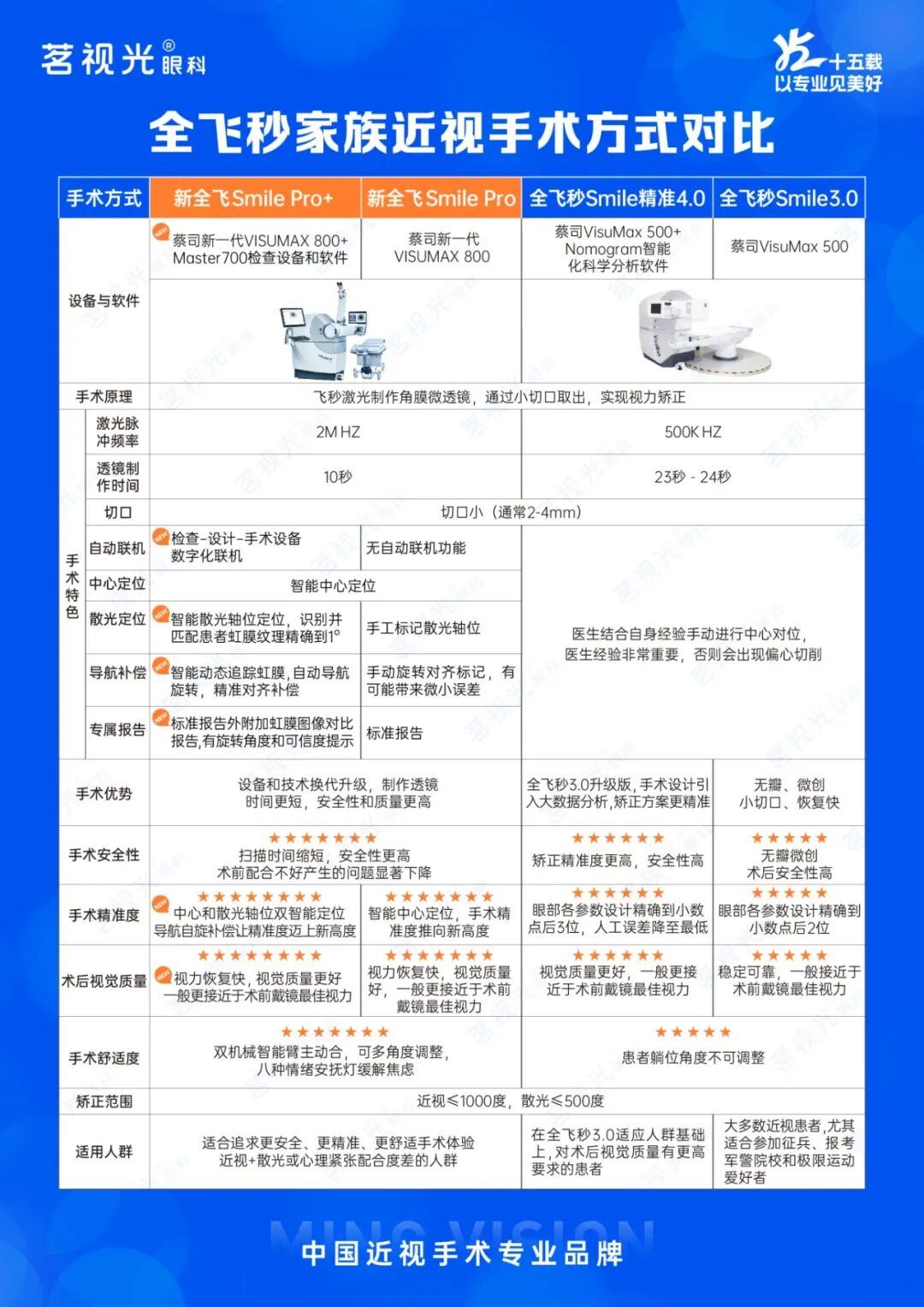
The SMILE series of procedures uses a femtosecond laser to create a microlenticule and an incision, and the lenticule is removed through a small 2–4 mm incision to achieve vision correction. With the iterative upgrading of technology and equipment, different SMILE devices and software have given rise to different types of SMILE procedures, such as SMILE 3.0, SMILE 4.0, the new minimally invasive SMILE Pro, and the new minimally invasive SMILE Pro enhanced version—four procedure types in total. To understand the differences among these procedures, please refer to the procedure comparison below for details.
New Minimally Invasive SMILE Pro Enhanced Version
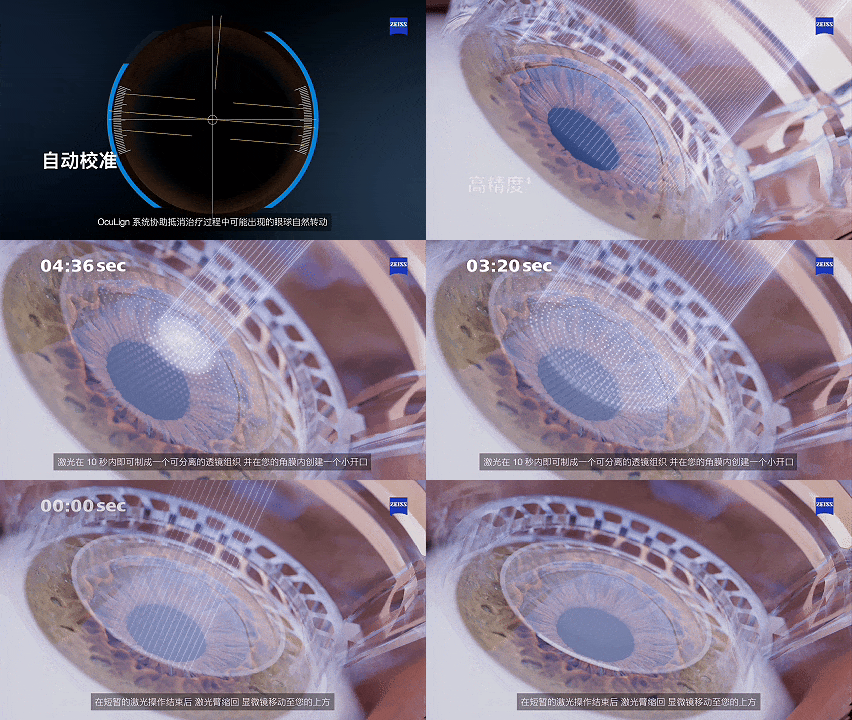
The new minimally invasive SMILE Pro enhanced version is connected and matched online with the IOL Master 700 examination system. Relying on iris registration technology, it collects each person’s eye information. During surgery, there is no need for the doctor to manually mark or draw lines; the device performs automatic calibration and tracks the rotation angle of the eyeball in real time to complete the matching, making the surgical operation more precise.
In June this year, Ming Vision & Ophthalmology took the lead in introducing the new minimally invasive SMILE Pro enhanced technology, and its clinical surgical volume ranks among the leading level nationwide. This fully upgraded procedure, SMILE Pro enhanced, brings students undergoing vision correction this summer an experience that is more precise in correction, easier and more comfortable, more controllable during surgery, as well as more reassuring throughout the process.
2.FS-LASIK (Femtosecond LASIK)
FS-LASIK requires the joint participation of a femtosecond laser and an excimer laser: first the femtosecond laser is used to create a corneal flap, then the excimer laser is used to ablate the corneal stroma. The incision in FS-LASIK is around 20 mm.
Thin-Flap FS-LASIK

Compared with classic FS-LASIK, thin-flap FS-LASIK produces a thinner corneal flap (a flap of 90 μm in thickness can be created, whereas conventional surgery creates a flap of 100–110 μm). At the same time, it is combined with the VISX STAR / S4 IR excimer laser for ablation, which saves corneal thickness to the greatest possible extent, saving an average of 5–7 μm per 100 degrees. Thin-flap femtosecond surgery fulfills the wish of removing glasses for those with a high myopic prescription and a relatively thin cornea. In particular, it has helped many students from all over the country who wish to apply to schools or to enlist in the military to realize their dreams.
Personalized FS-LASIK
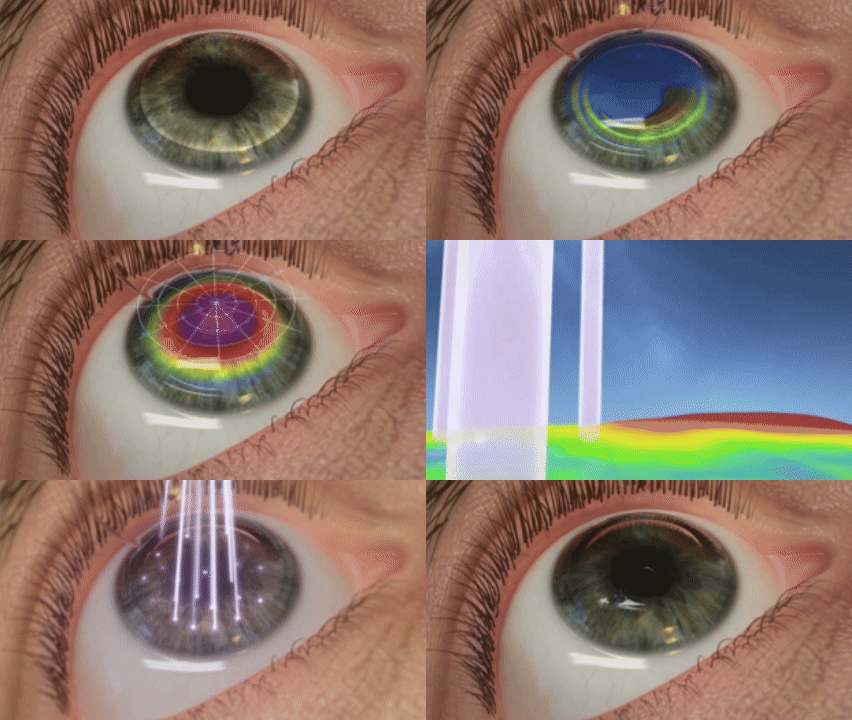
On the basis of FS-LASIK, personalized FS-LASIK adds personalized guidance for corneal stromal ablation. Beijing Ming Vision & Ophthalmology is able to perform four kinds of personalized guided surgery in total: corneal topography guidance, wavefront aberration guidance, corneal topography–derived corneal aberration guidance, as well as Wavelight Plus. It refines the cornea with even greater precision, eliminating large astigmatism and the abnormal shape of irregular astigmatism, so that long-term postoperative visual quality is better.
One of the Personalized FS-LASIK Options: Wavelight Plus

Wavelight Plus is one of the four types of personalized FS-LASIK surgery. Before surgery, whole-eye biometric examination equipment is used to collect as many as 138,000 data points of the entire eye, a personalized and precisely customized ablation plan is designed, and ray-tracing technology is applied to correct the prescription together with higher-order aberrations at the same time, improving visual clarity as well as comfort.
3. TPRK (Transepithelial Photorefractive Keratectomy)
TPRK is also often called Trans-PRK; it is the traditional surface myopia surgery from the 1990s. It does not require creating a corneal flap, and instead uses the excimer laser directly to polish and reshape the corneal surface layer together with the inner tissue. The Smart all-laser surface myopia surgery performed on the AMARIS 1050RS excimer laser platform is a corneal surface ablation procedure that uses the excimer laser throughout the entire process, with no need for a mechanical blade or a femtosecond laser to create a corneal flap, making it relatively safer.
After all-laser surgery, there is relatively more obvious stinging pain and a foreign body discomfort. At the same time, the visual recovery period is also longer than with other procedures: continuous and standardized medication is required for 3 to 6 months, and there may be a certain risk of elevated intraocular pressure, so it is not suitable for those who cannot guarantee the time for postoperative reviews.
4. Corneal Laser Surgery Combined with Corneal Cross-Linking
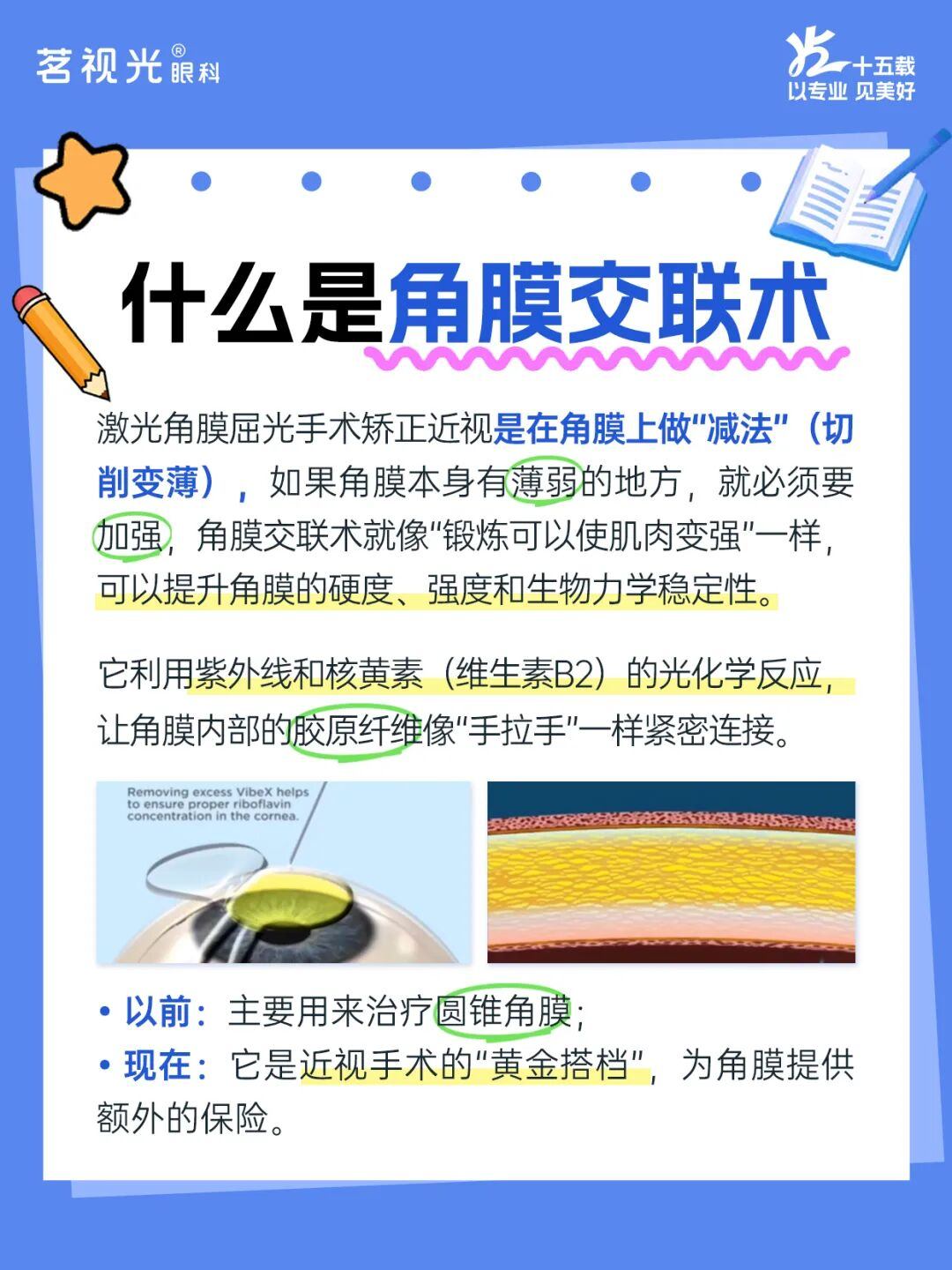
On the basis of the corneal laser surgeries described above, corneal cross-linking is applied in combination. It is mainly indicated for people whose corneal shape is relatively irregular before surgery and for myopic people with a relatively thin cornea. It is a personalized supplementary option, and not everyone needs to add cross-linking. Combining corneal cross-linking can significantly improve the biomechanics of the cornea, reducing the risk of regression as well as keratoconus.
II. Intraocular Lens Surgery
To put it simply, ICL surgery means placing a custom-made contact lens directly into the eye and fixing it in place.

Lens implantation surgery (such as ICL / TICL) is an “additive” type of myopia correction surgery, which changes the refractive power by implanting an artificial lens into the eye. It does not alter the normal structure of the cornea, and the correction range can reach 2,000 degrees. It is suitable for people with a high prescription and a thin cornea, or others who do not meet the conditions for corneal surgery. Compared with corneal surgery, however, it is an internal eye surgery and carries a slightly higher risk. At present it is not recognized in the physical examinations for military academies or enlistment, but some majors at police academies do accept it.
In the final analysis, what matters most in myopia surgery is the suitability of the choice. Each type of procedure has its own characteristics, and the wise approach is to make the choice under a doctor’s guidance, based on one’s own eye conditions.
 Online Booking

 Tel
 WeChat

 Address

 Consult